
In 2023, on a visit to perform at UR’s Modlin Center for the Arts, country music star Rosanne Cash participated in a public panel discussion the night before. Popping by out of curiosity was first-year student Paxton Mills. A future biochemistry and molecular biology major with no musical training, she was learning that Richmond’s stages are places where every student can end up in conversation with someone legendary. From the stage, Cash told a story about learning guitar at 18 while messing around in dressing rooms and on tour buses between cities, picking it up the way you pick up anything you give a go — by trying, failing, and trying again.
For Mills, something in it felt like permission. “I thought, ‘That’s not very different from me,’” she recalls. “‘There’s no reason I can’t do that too.’”
Within weeks, she looked up what UR’s music department offered and found a series of guitar classes that progress into private lessons and ensemble performances. When she emailed guitar instructor Kevin Harding to express interest, she let him know she was a true beginner. He wrote back: “Join us.”
What followed wasn’t a detour from her scientific self, but a valuable supplement to it. “It’s exercising new neural networks and pathways that I probably have not utilized to their full extent previously,” she says. “It’s not just another half-unit on the course load schedule. It really is more meaningful.” Months after taking up the instrument, she played her first song publicly — a fingerpicked Carter Family tune — at an on-campus showcase.
With UR’s approach to the arts, this kind of transformation isn’t a happy accident. It’s fundamental to the design.
The arc, not the event
Artistic innovators and legends from across genres regularly perform in Camp Concert Hall and the Alice Jepson Theatre. Many of the university’s highest-profile visitors, like Cash, come to the university through the presenting program at the Modlin Center. Increasingly, they commit to residencies during which they spend extended time with students and the campus community. Other artists regularly come to campus by invitation of individual faculty and curricular and cocurricular programs.
Paul Brohan, the Modlin Center’s executive director, has a phrase he returns to when explaining the presenting program’s ambition. A residency, he says, is “an arc of a relationship and an impact” — not a transaction, not a name on a marquee to move tickets. Since his arrival on campus five years ago, he’s built a presenting program that augments the university’s liberal arts mission.
“I see a professional presenting program on a university campus as needing to reflect the ideals of that university,” he says, “and to find ways that the artists who visit us are making true contributions and connections with our campus, our students, our faculty, our staff, our community.” That means supporting more concentrated time — weeklong residencies, classroom visits, shared meals, and when everything aligns, multiyear projects. Decision-making about the presenting series, Brohan notes, “is not dependent upon how many tickets we sell. It’s about quality and depth of impact.”
A residency is “an arc of a relationship and an impact” — not a transaction, not a name on a marquee to move tickets, says Paul Brohan, the Modlin Center’s executive director.
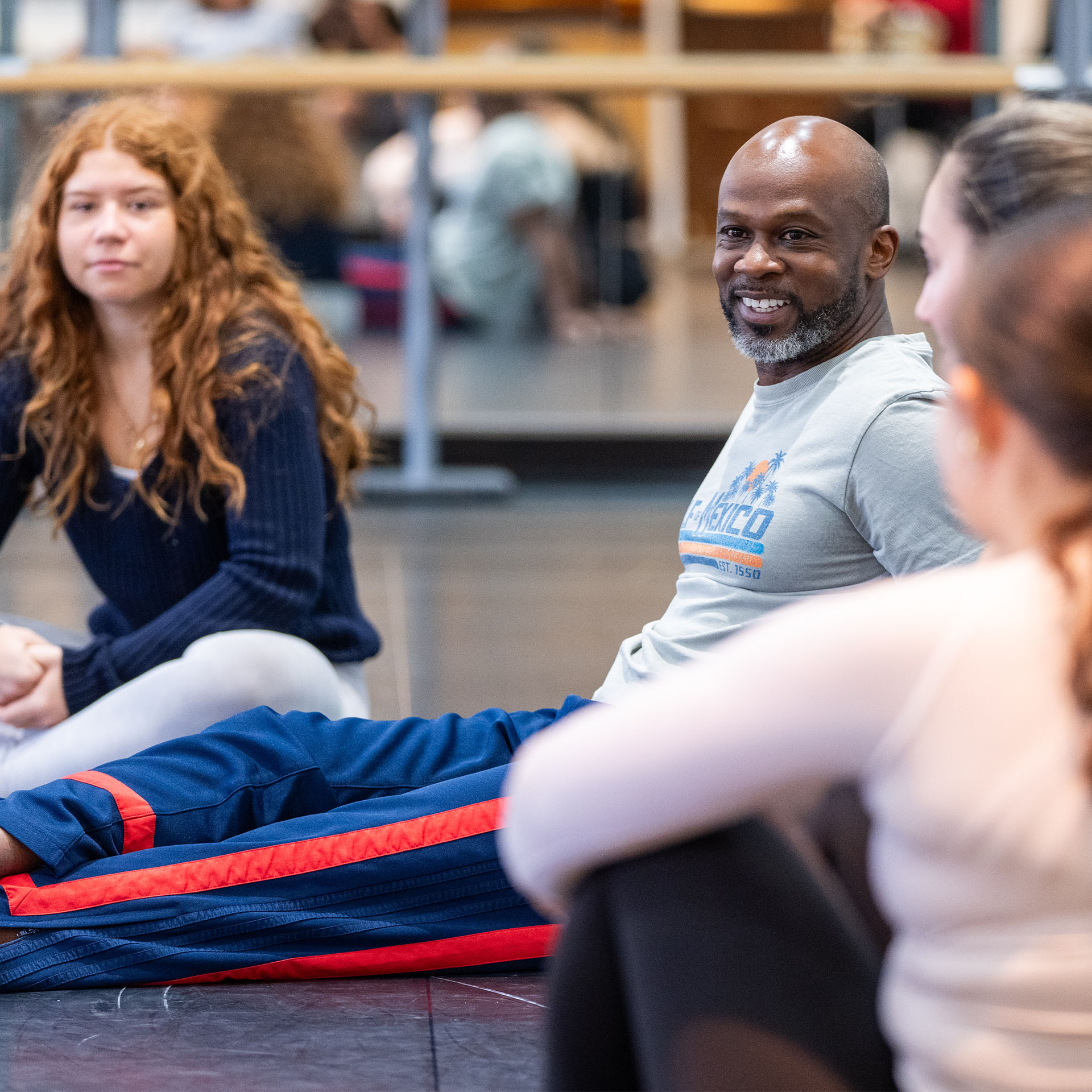
Marc Bamuthi Joseph with students on one of his many visits to campus during his three-year residency
The longest engagements offer extraordinarily rich opportunities. The poet and performer Marc Bamuthi Joseph has been working with the campus on a three-year, Modlin-commissioned project threaded through law classes, language departments, community dinners, and conversations on walks around Westhampton Lake and along the James River. From those relationships emerged an 11-page poem, then a seven-page libretto, then a commissioned symphonic work with the Richmond Symphony set for its world premiere in Camp Concert Hall April 9–10, 2027. Symphonies in several American cities have already expressed interest in bringing the piece, called Remembering Empathy, to their communities.
That kind of outcome requires institutional scaffolding: funding that allows long stays, production staff willing to try things, and faculty who treat visiting artists as curricular partners. When those elements converge, a residency becomes a learning engine.
What happens in the studio
For students, residencies tend to do three things that amplify regular coursework: accelerate technical risk-taking, raise the bar of ambition, and crack open new creative identities. The mechanisms look different for arts majors versus novices like Mills, but the underlying dynamic is the same — a close encounter with a working artist that changes what a student sees as possible.
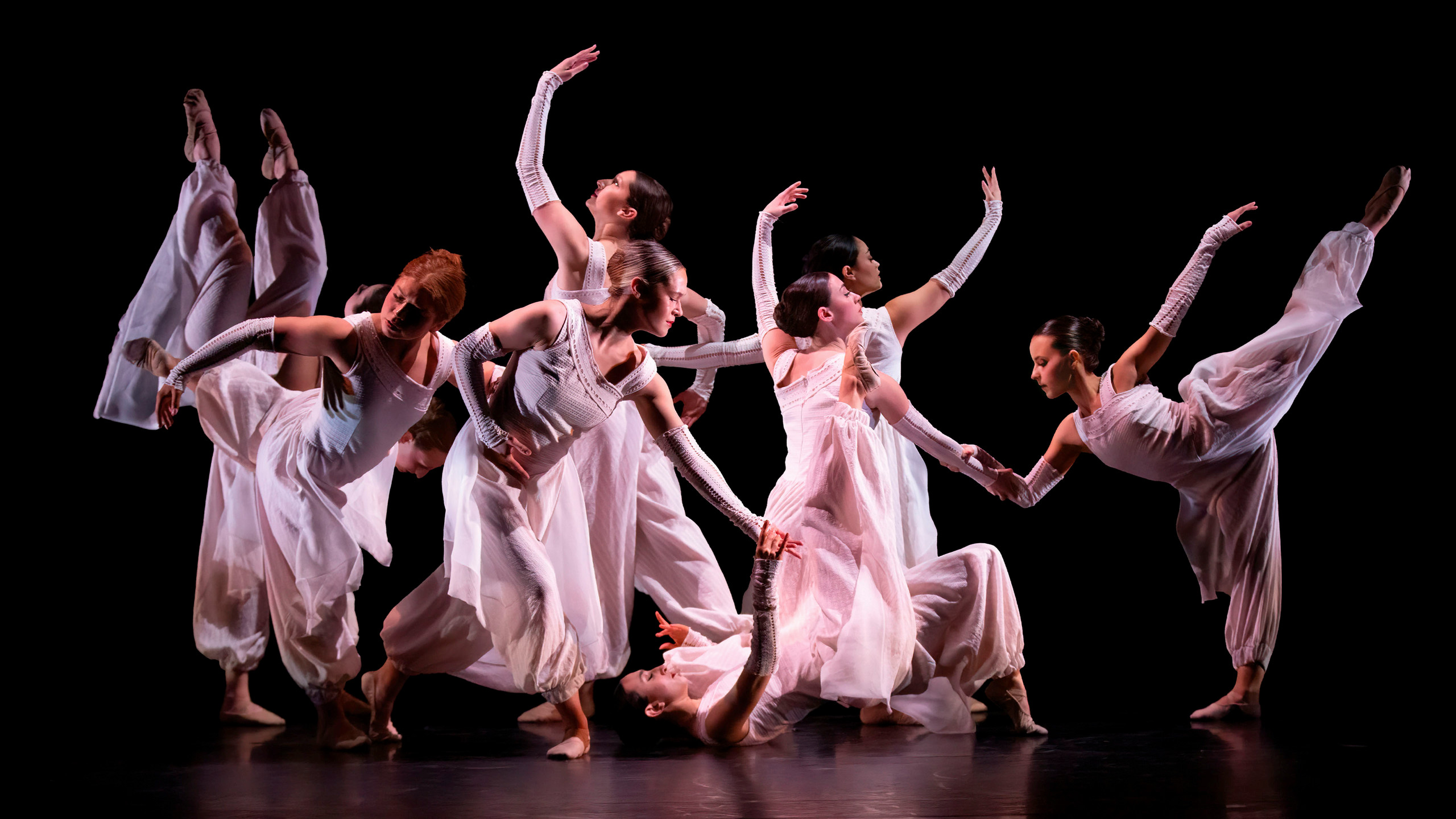
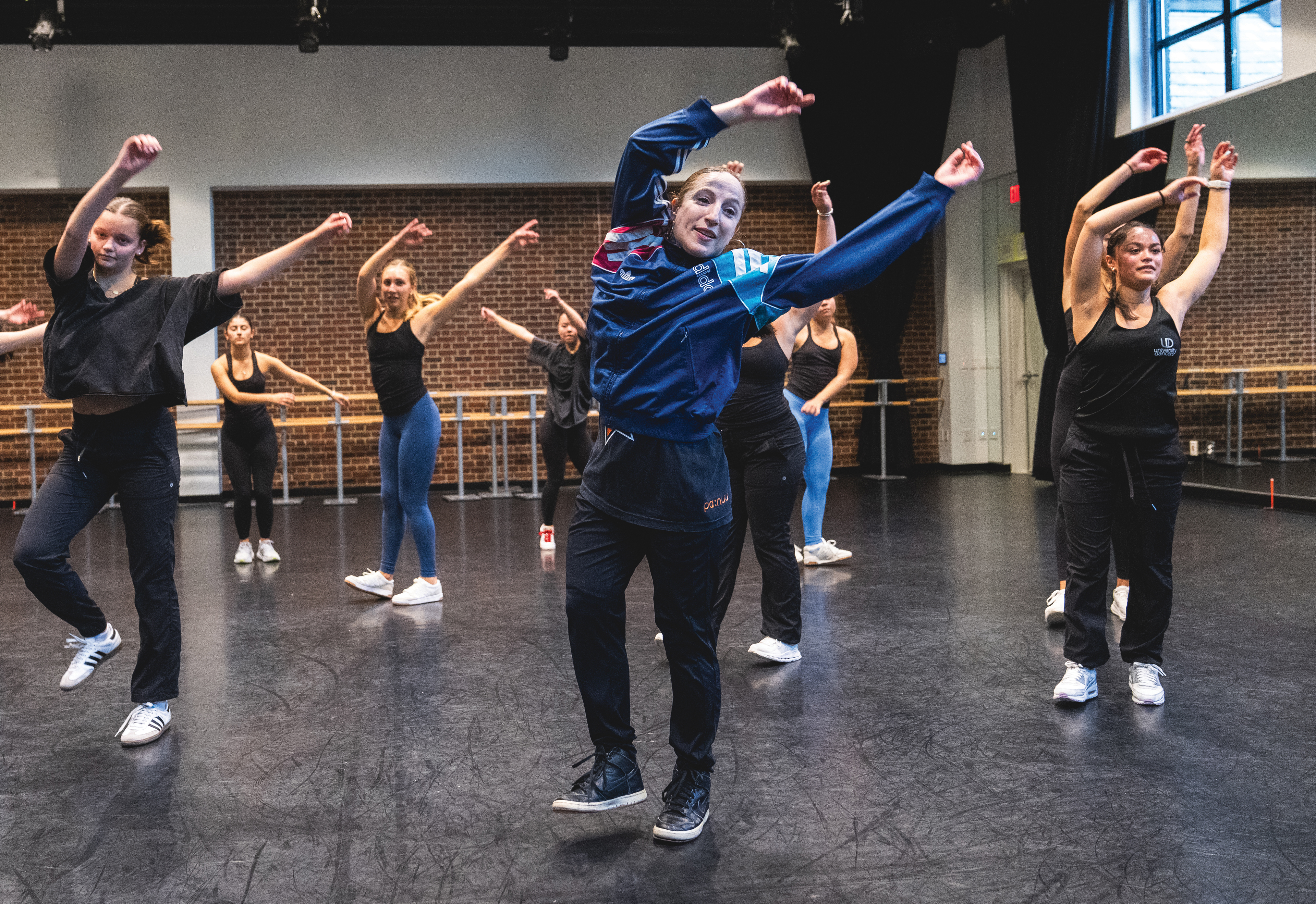
In autumn 2025, Lucy Lew, ’28, a dance and elementary education major, listened as guest choreographer Ephrat Asherie offered rhythmic instruction that Lew had never heard. Asherie told the dancers to “dance on the end of the quarter note.” For Lew, the instruction seemed “so specific and weird” at first, she says. “How are you supposed to hit that? But picturing in your mind, the imagery makes so much sense.”
Lew applied similar language when she led fellow dancers through her own choreographed piece. “I would tell my dancers to dance underneath the music — which is another kind of, ‘How in the world do you accomplish that?’ But Asherie opened my eyes to the fact that musicality isn’t just one-dimensional.”
In the same dance studios, Annie Hamilton, ’26, was having similar encounters and, by senior year, was company captain of University Dancers. One of the residencies she remembers most vividly came earlier this year when guest choreographer Trey McIntyre pushed her entirely out of the ballet vocabulary she’d grown up with and into an unfamiliar movement style. McIntyre had a particular instruction: sustained eye contact at almost all times. It was a single direction, but it transformed Hamilton’s understanding of the piece — and it didn’t stay in that piece. After the residency, rehearsal directors repeated the instruction in other contexts.
In the experiences of both Lew and Hamilton, the guest left, but the lessons remained.
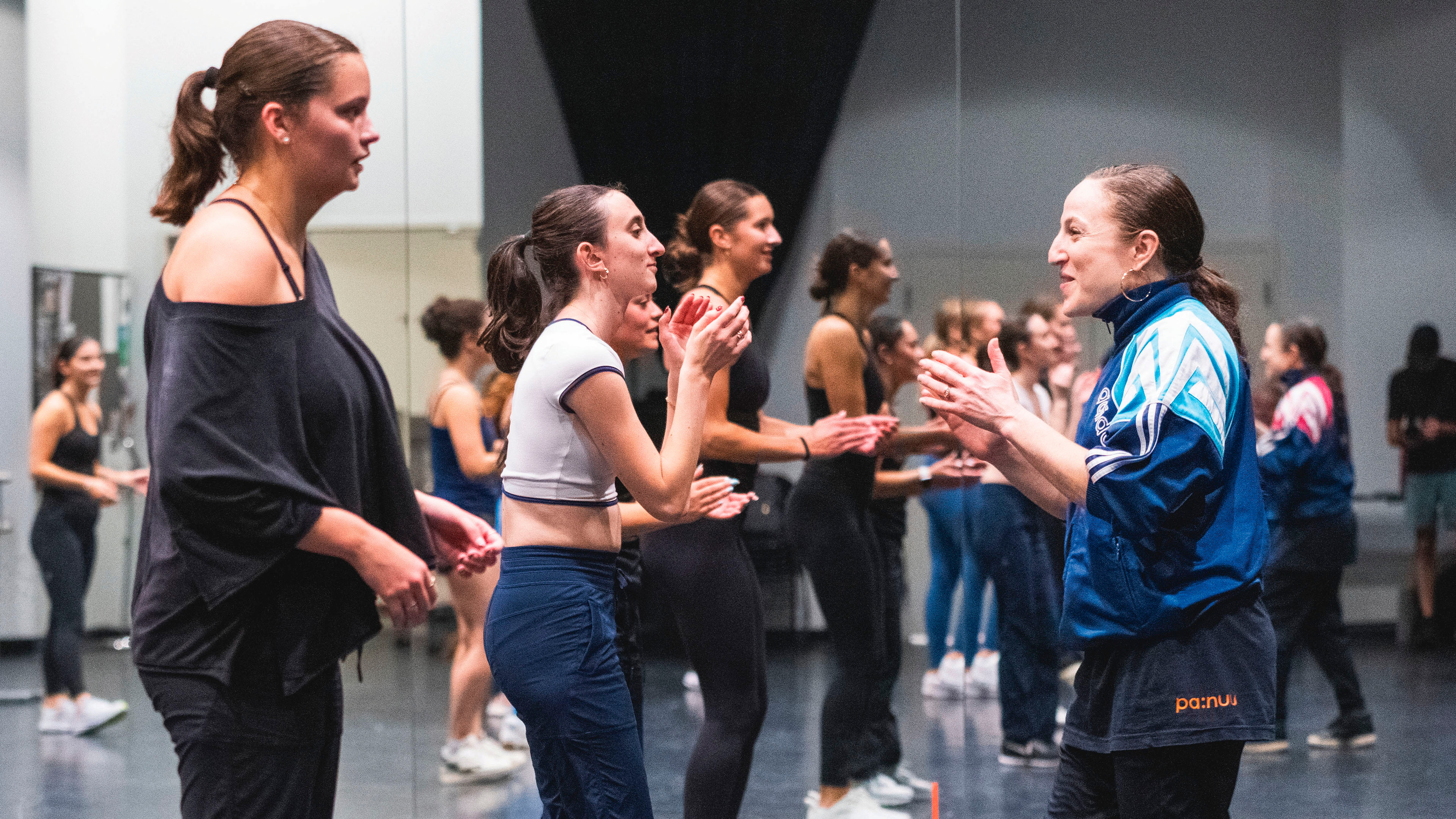
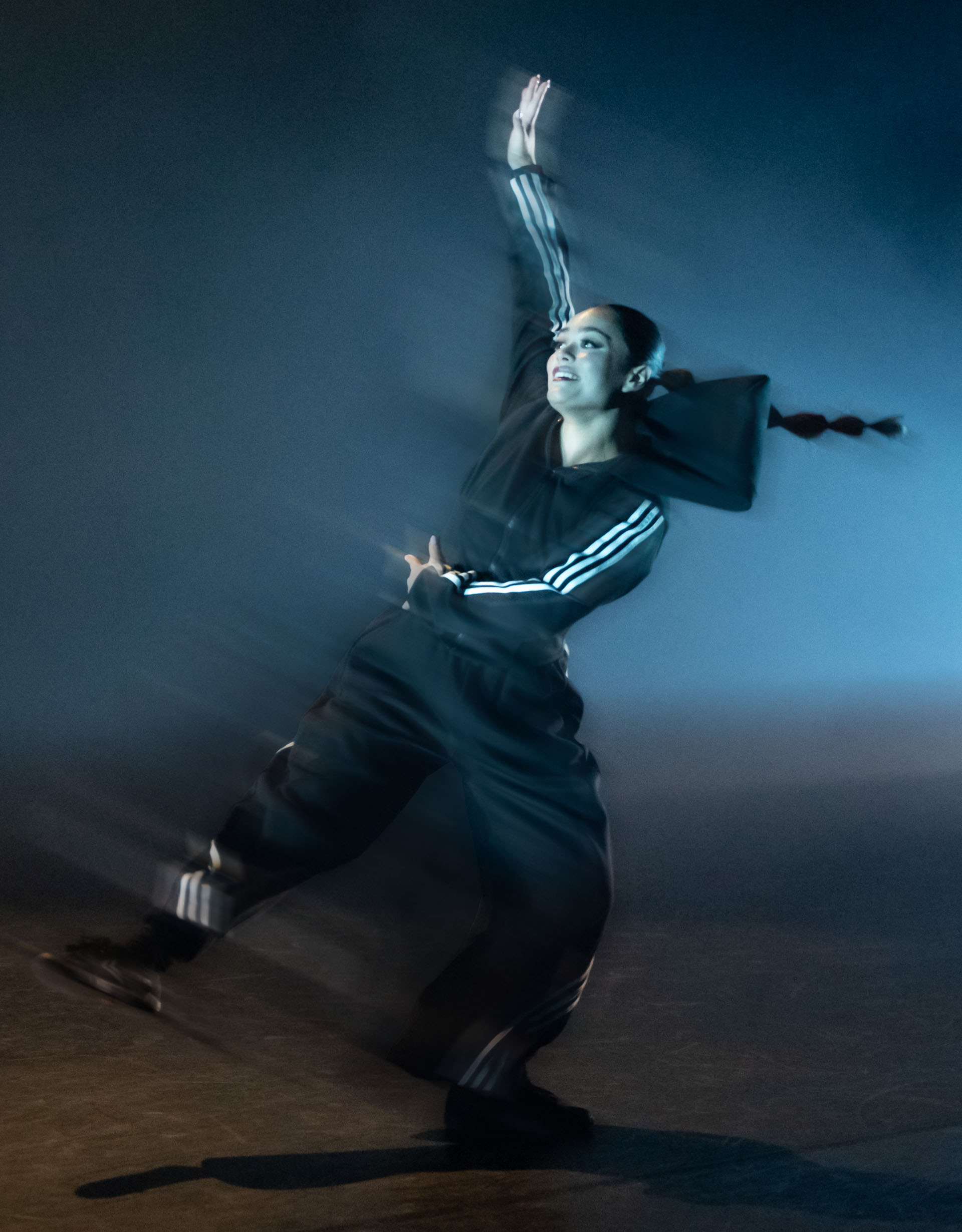
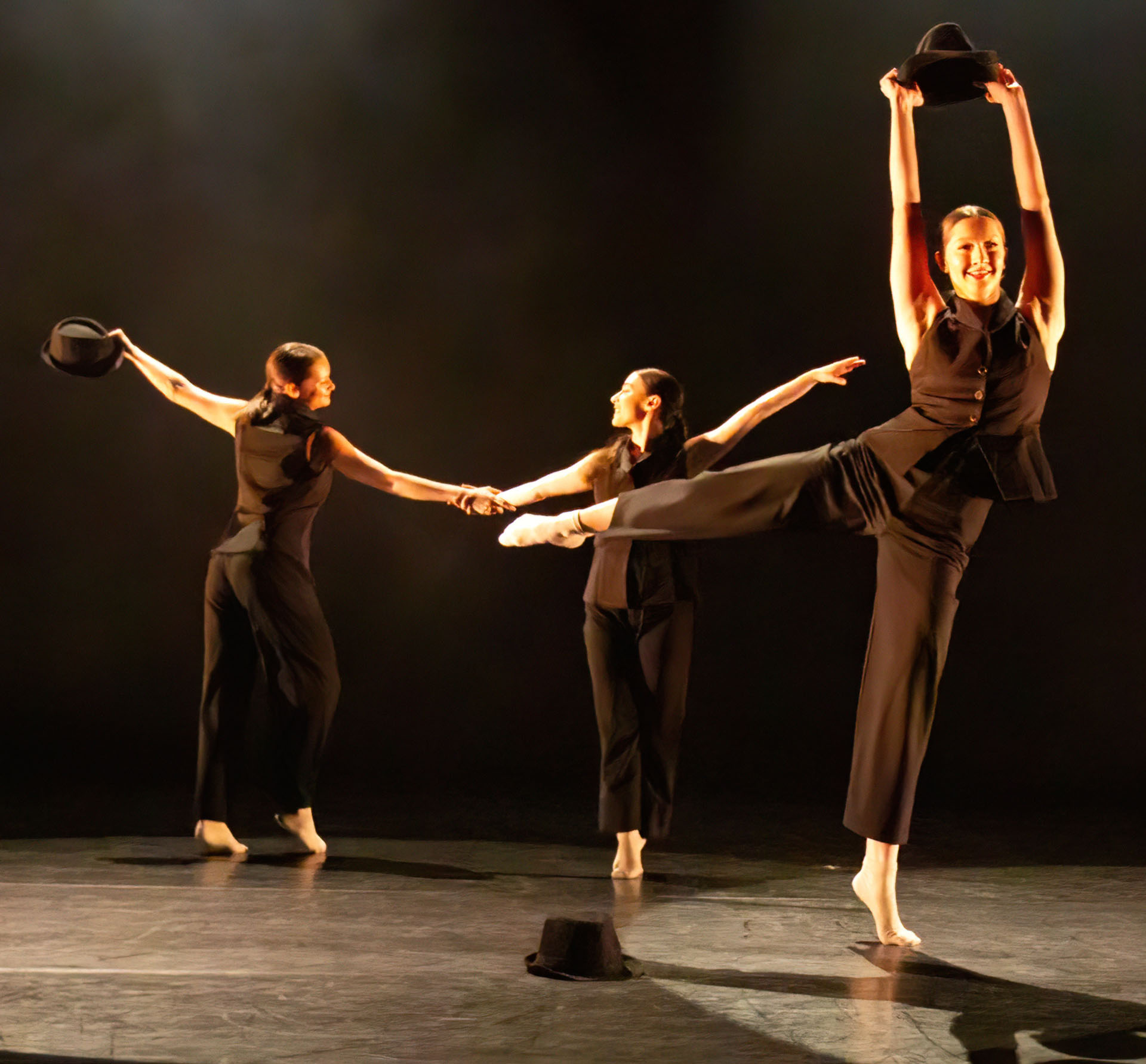
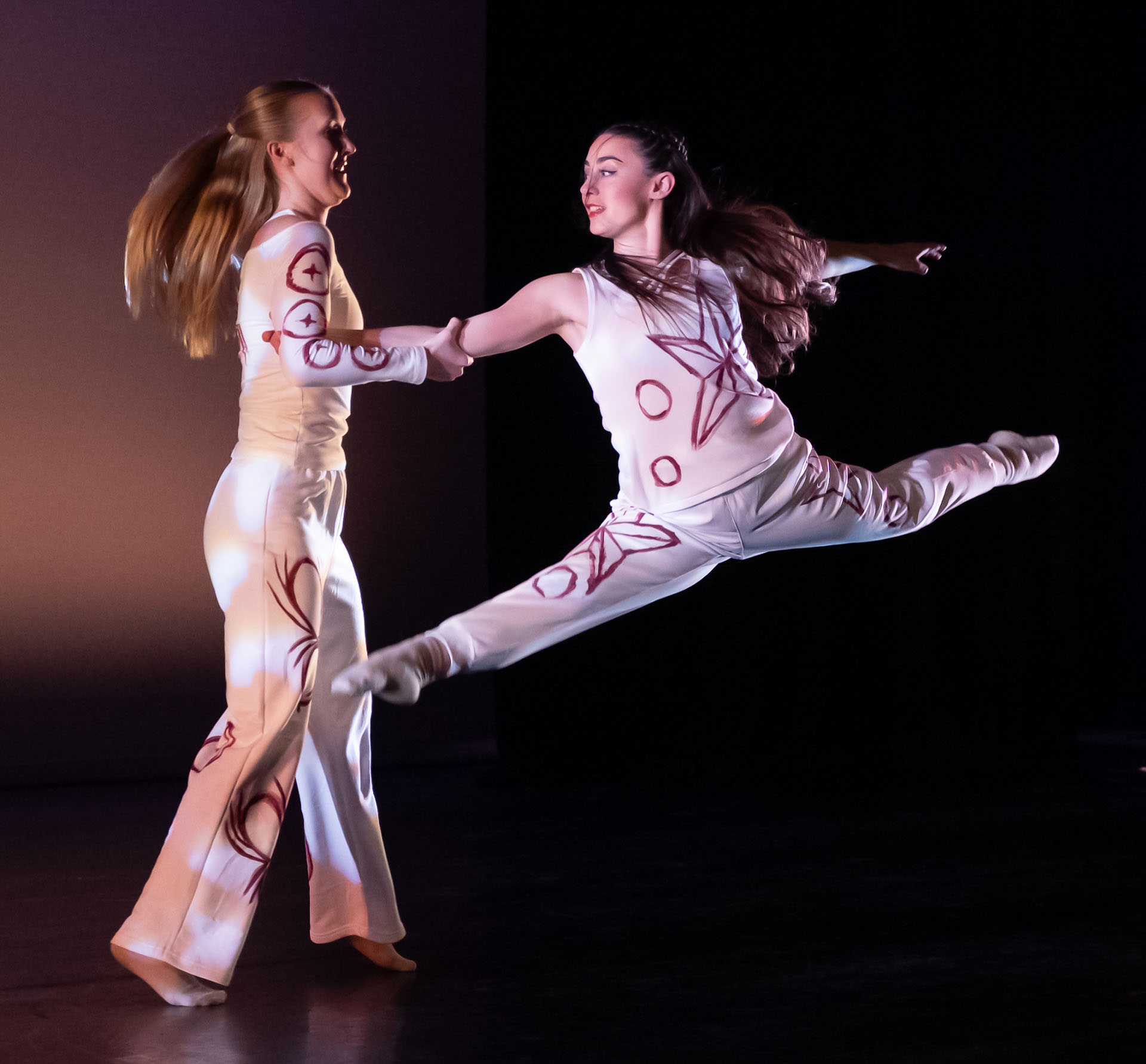
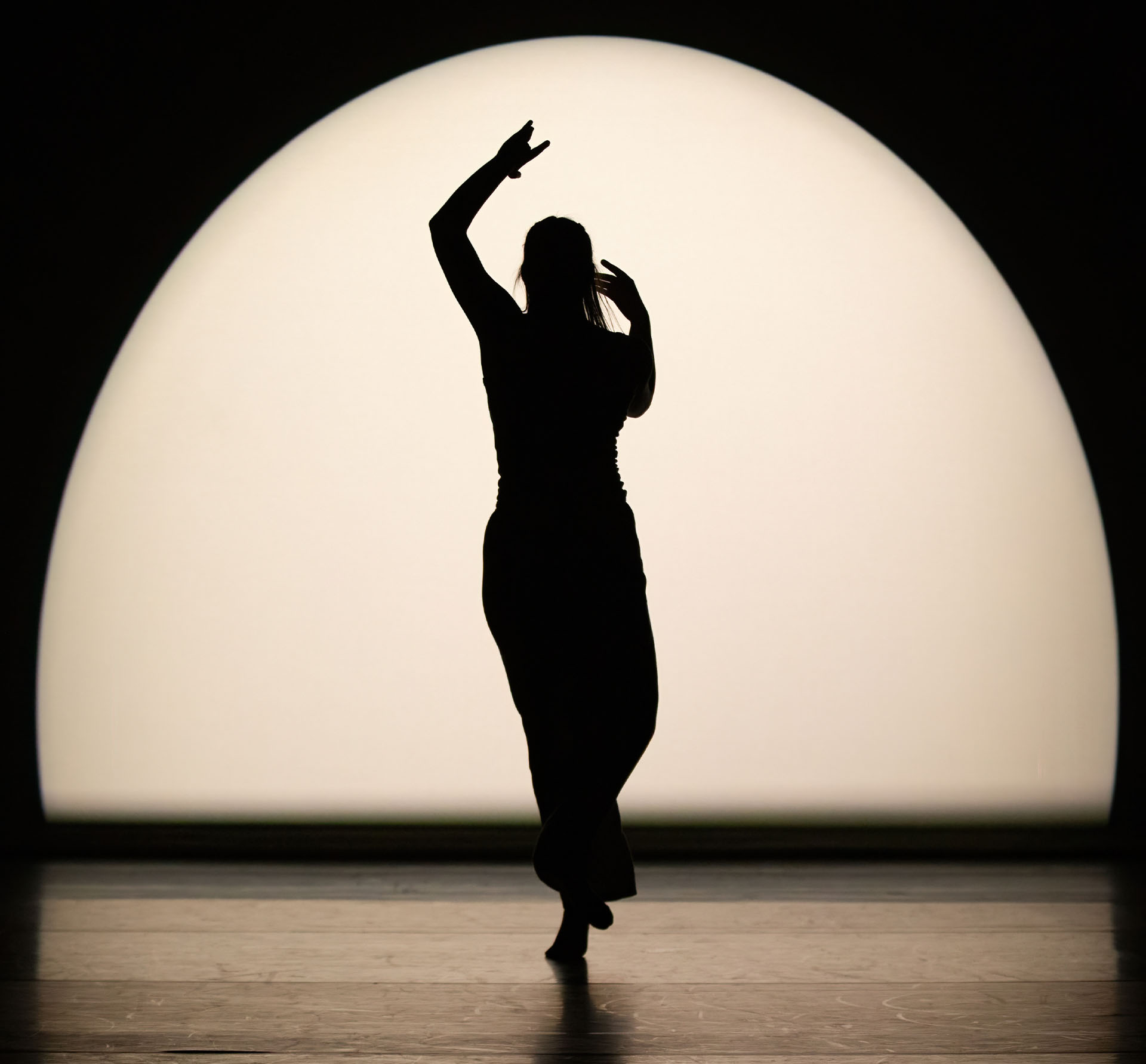
Anne Van Gelder, a theater and dance faculty member and the artistic director of University Dancers, recognizes that dynamic at work over time. “When we are all in the studio, moving together, those are truly special moments. The energy is palpable as students enter the space. Midway through the residency week, the students and guest artist have developed a sense of trust and rhythm with one another, which creates an environment that is both focused and collaborative. Rehearsals seem to fly by, yet an extraordinary amount is accomplished.”
Guest artists, she’s careful to add, don’t replace what faculty do. “Our department’s faculty are exceptional creators, mentors, and educators, and students benefit from their sustained guidance over time,” she says. “Guest artists offer a different kind of learning through intensive, short-term residencies. In these condensed periods, students must quickly adapt to new styles, communication methods, and movement vocabularies.”
The music department also regularly sees the impact of guest artists. Professor Mike Davison, director of UR’s Jazz Ensemble, jokes about their effect through what he calls “the 50-mile syndrome.” Students, he says, are sometimes more apt to absorb the same lessons he gives when they are delivered by someone from off campus.
“I can tell students about a technique — say, about air,” or how to breathe while playing. “A guest artist comes in and tells them the same thing, and they believe it and come tell me about it.” Students, he says, see “not only is this a great player, but look at how fast they learn, and look what they bring to the table. They think to themselves, ‘Well, maybe I can do that.’”
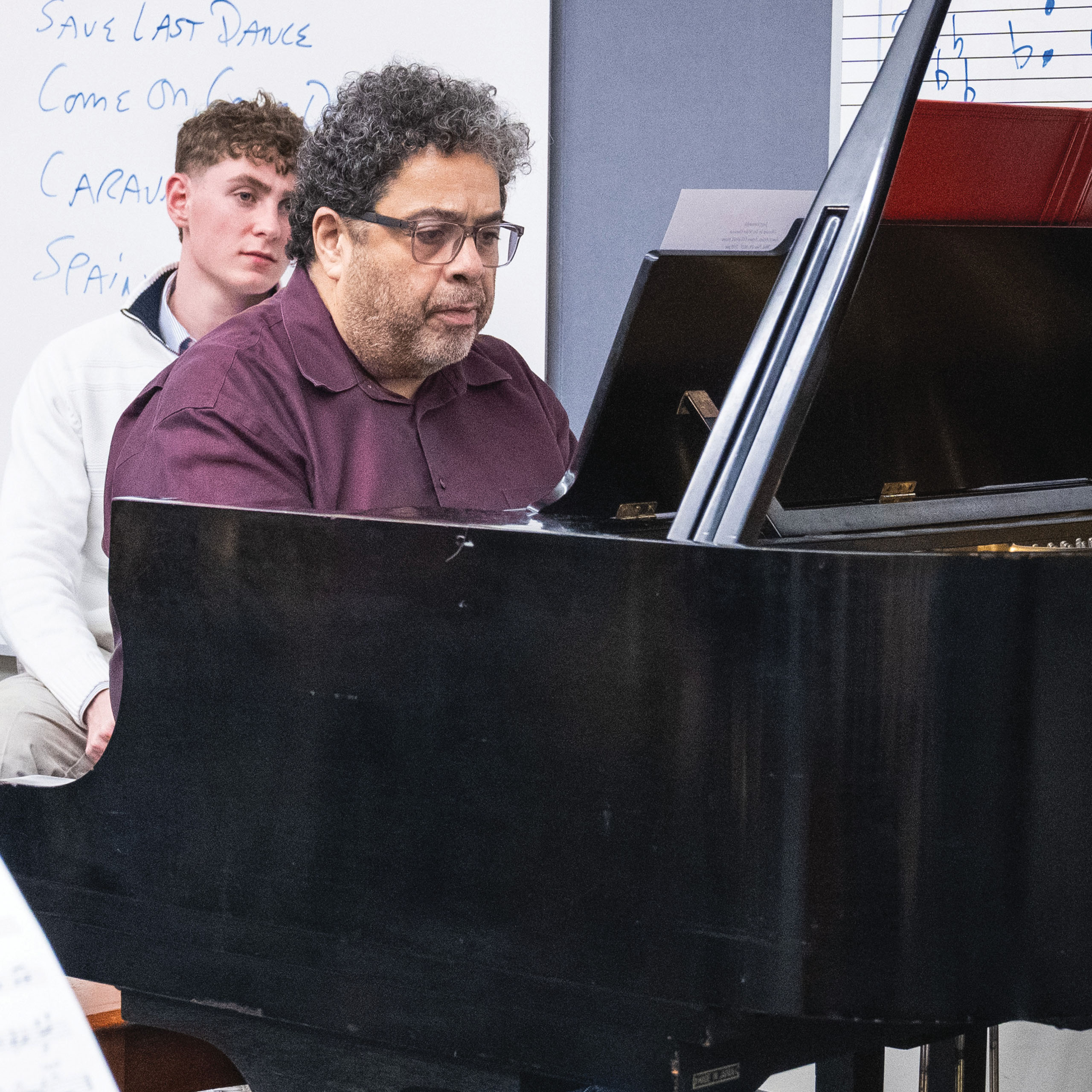
Lucas Watts, ’29, who plans to pursue a music minor alongside philosophy and leadership studies majors, felt that pull firsthand. When pianist Arturo O’Farrill arrived for a visit, Watts ceded the piano bench and watched the Grammy-winning artist play from just feet behind him. Later, O’Farrill sat in during a jazz ensemble performance. “It’s incredible to be sitting so close to such an amazing pianist,” Watts says. “I’ve been playing these songs all semester with the band, but we’re improvising. Hearing the creative ideas that he comes up with is really fun.”
Jonathan Spivey, a 2006 alumnus who returned as a guest performer, found something that Watts may discover years from now — a circularity. In spring 2025, he returned to campus for a production of the Broadway hit Urinetown. It gave him the opportunity to work once again with Dorothy Holland, a theater professor who had directed him as a student nearly 20 years earlier. He also shared the stage with Catherine Shaffner, who had appeared as a guest artist during his student days.
“Working with both Cathy and Dorothy felt so full circle,” he says. “They’re a big reason why I wanted to come back.” He was also conscious of what he was modeling for today’s students. “It makes [an arts career] more real and attainable because you see people who are actually making it work,” he says. He tried to demonstrate that from the first rehearsal — punctuality, focus, how to receive a note — because he knew students were watching. “You have a huge responsibility to set an example of behavior in a rehearsal room. That’s a big part of it, and also work ethic.”
Beyond the arts
Disciplinary breadth feeds professional artists and students in the arts alike, and residencies allow its benefits to emerge.
O’Farrill makes that case directly. He tells students that if they want to be great jazz musicians, they should learn to cook, read philosophy, study science, and be good conversationalists. “Musicians should be human beings,” he says. “I think your art thrives when you care about history, sociology, and anthropology.”
At Richmond, he explored that instinct beyond the music programs. During one recent visit, the Modlin Center and the chaplaincy hosted him for dinner with a cross-section of the campus — law students, faculty, alumni, and others. The group talked about why they do whatever it is they do. “I found that the process, which could have been so uptight and artificial, was really very healing to me,” he said. “It fed me. I expected to go and have to serve, but found that I was served.”
“I think your art thrives when you care about history, sociology, and anthropology.”
That cross-disciplinary richness can come as a surprise to guest artists more accustomed to visiting specialized conservatories. At Richmond, they repeatedly encounter a mix of majors in the room. Lew knows the moment well. “They are always shocked when they ask, ‘So what are your majors?’” she says. “They’re expecting everyone to say ‘dance, dance, dance,’ and it’s always, ‘I’m bio,’ ‘I’m business.’ And there’s not a single person in that circle with one major. It’s so funny to see them understand that.” Asherie is one of the artists who embraces the mix. “I love that the students are dancers and this [other thing],” she says. “They’re dancers and biologists or dancers and mathematicians or writers. They’re really interesting young people.”
Like other faculty, Patricia Herrera, a theater professor who coordinates classroom visits around performances, makes preparation central to her pedagogy. Before an artist arrives, students read about the work and the artist’s context; after the performance, they reflect on what they’ve seen and learned. “When you experience them and their art, it goes beyond what you read,” she says. She remembers a session with Las Cafeteras, a band from East Los Angeles, that became something unexpected. The artists asked the students, “If you were president, what would you do?” The room went quiet.
“I just remember the moment of silence as they’re thinking about it because I don’t think they’ve ever been asked that question,” Herrera says. “It was a very empowering moment.”
These encounters happen outside classrooms, too. Bamuthi frames his extended Richmond engagement around exactly that — meals, walks, mornings on the James River bridge, a workout with a field hockey coach who will be in the audience for his 2027 premiere.
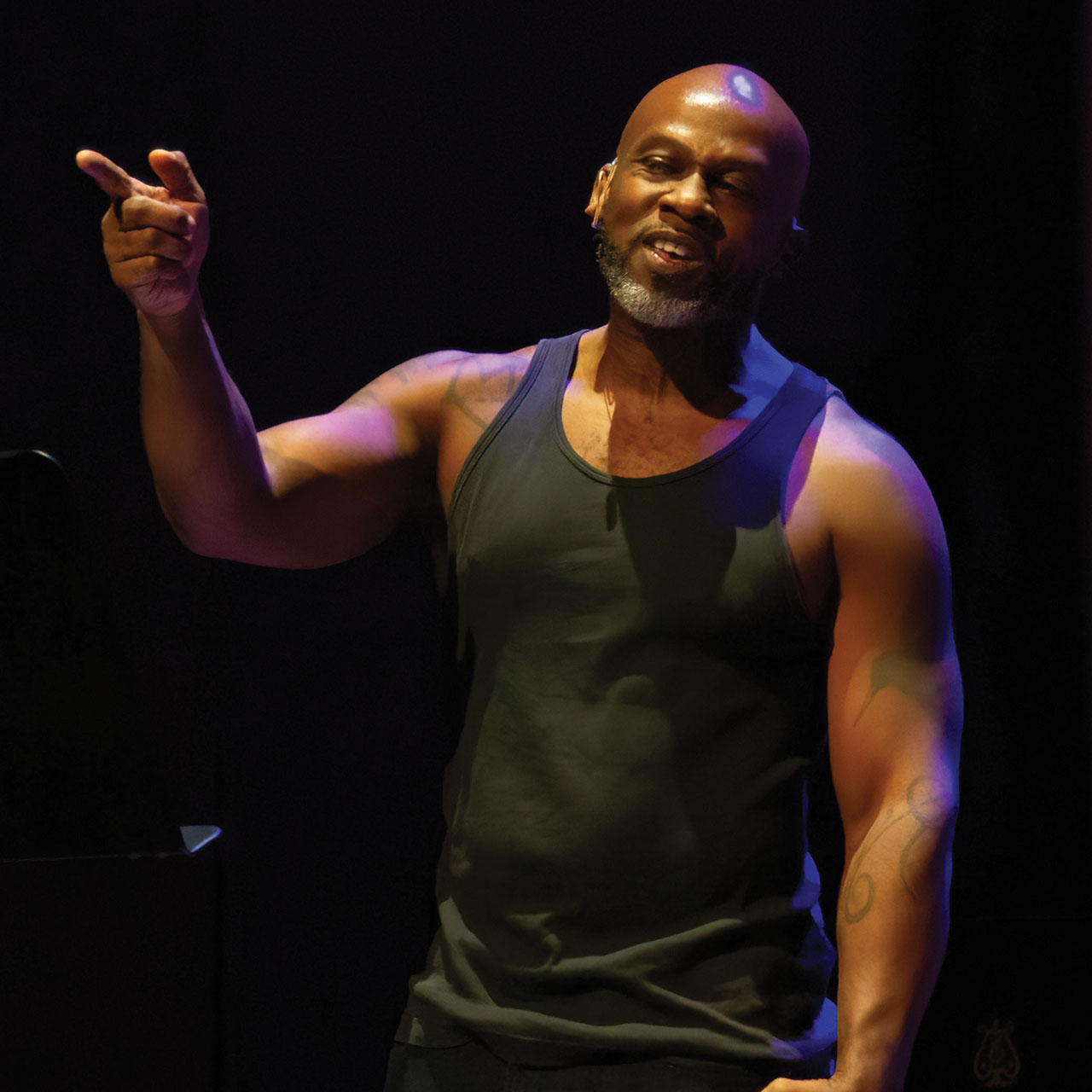
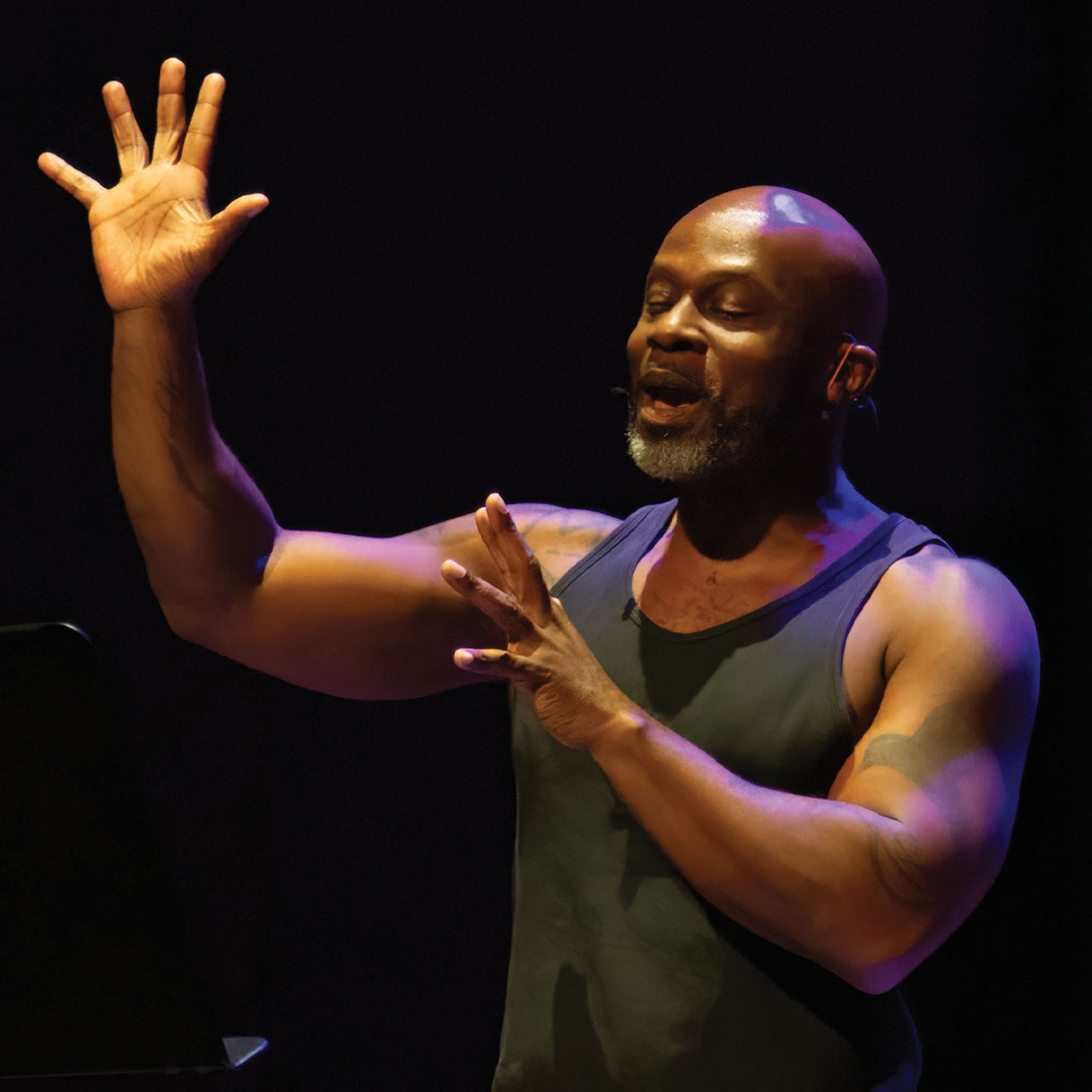
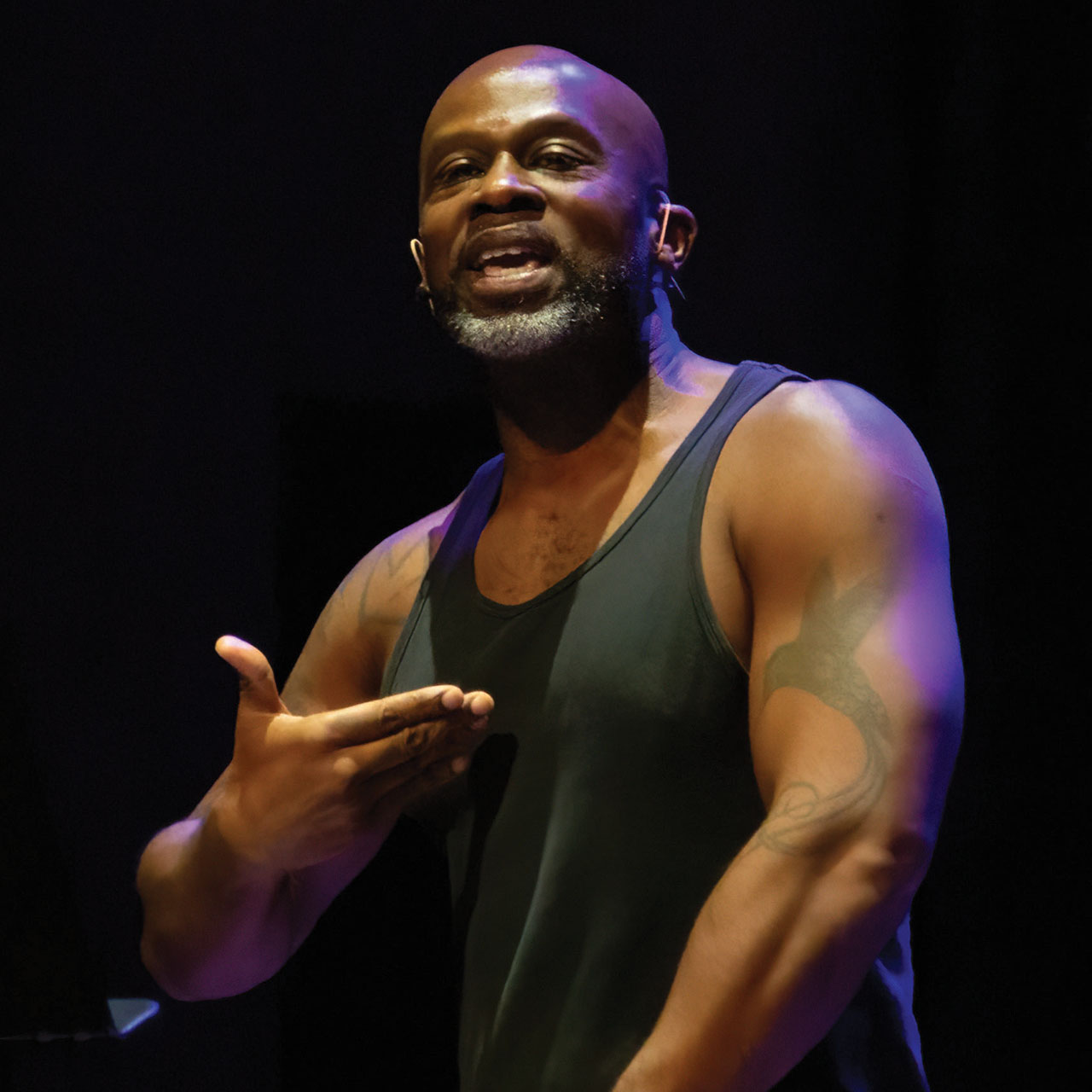
Because of this three-year time frame, “there’s a community that I’ve been able to casually grow over time,” he says. “I’m able to reference things in a nonacademic way that are germane to the experiences of people who live here.”
Campus keeps finding new nooks to explore. Brohan points to the week the Martha Graham Dance Company was in residence. As part of it, artistic director Janet Eilber co-led a session of a robotics class taught by Patrick Martin, a computer science professor who experiments with choreography and machines. “You would never think the Martha Graham Dance Company would be in a robotics class,” Brohan says, “but it’s the curiosity of our faculty and the openness of artists that lead to these kinds of opportunities.”
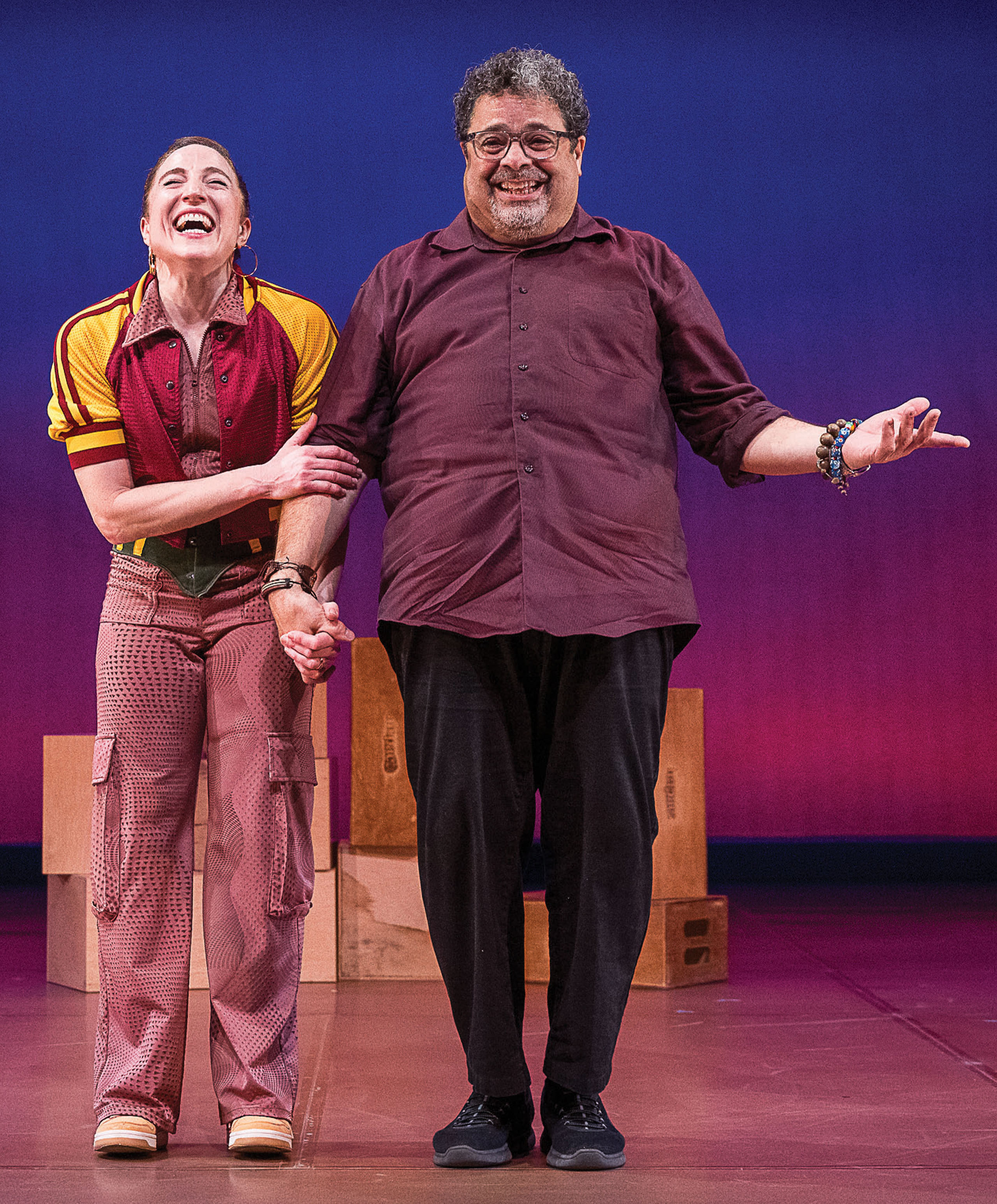
Asherie and O’Farrill also exemplify another type of opportunity: collaboration. In addition to their respective residencies with the dance and music departments, the pair worked together on a Modlin-commissioned piece combining her choreography and his music. Called Shadow Cities, it was performed on campus by Asherie’s dance company and O’Farrill’s Afro-Latin jazz band.
The impact is lasting
Herrera has a story that illustrates what she means when she talks about what guest artists leave behind. A few years ago, the power went out in the middle of a performance by solo Cherokee performer DeLanna Studi. Students who had met her during a class visit watched her on stage as she kept going anyway. “The students were riveted by the fact that she was able to continue telling her story without any of the production elements — and it was as impactful,” Herrera said. The lesson: The story is the foundation. Everything else was there to support it.
“There’s a lot of intentionality in bringing artists in, and sometimes we don’t know what that intentionality is,” Herrera says. “What I tell students is to bear witness to the gift the artist is offering you with a sense of curiosity. There’s a story to be told in the arc of a syllabus or a season at the Modlin Center.”
Brohan, for his part, is comfortable with the fact that the full returns of this approach can take time to show up. Concentrating resources on longer residencies means fewer productions in a season — a deliberate trade-off. What he’s getting with it are experiences that plant an idea that surfaces years later, in a different city, in a different stage of life.
“It’s part of a contribution to the development of a student as an adult, a responsible citizen, and a human being,” he says. “You can’t measure that, and you may not even know about it until 20 years later. But the fact that it occurs is what keeps me going in this work.”
Mills, for her part, is still playing guitar, even as she headed off just before graduation this spring to Kuala Lumpur, Malaysia, as one of eight Susan Skinner Memorial Fund Scholars worldwide. There, she presented her research at the World Federation of Hemophilia World Congress, another step in her career trajectory to becoming a hematologist. On the side, she’s working through fingerpicking patterns, learning Carter Family songs, exploring another dimension to her identity.
Bamuthi is working toward his work’s premiere in April 2027. The audience that gathers will include people he’s met in classrooms, around Westhampton Lake, and at a café, a barbershop, and an early-morning workout class. They’ll be coming as participants, not witnesses.
A first-year student picking up a guitar because a music legend made learning it sound ordinary. A dancer dancing on the end of a quarter note. A conversation becoming a libretto backed by a symphony. These are the kinds of outcomes Richmond’s model is designed to produce — and why the artists buy in. Creativity is both a method and a mindset and, at Richmond, central to learning.