Curriculum
Getting AI right
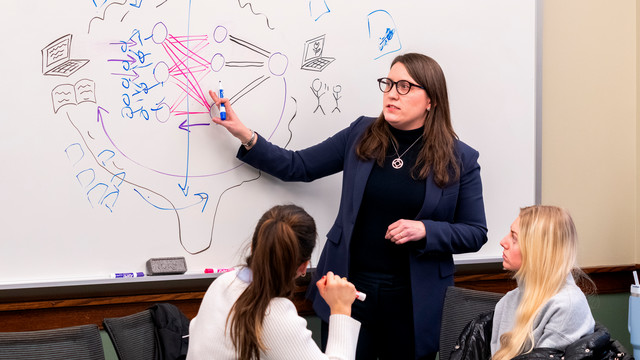
“The idea of digital natives is a myth,” UR’s Lauren Tilton told The Chronicle of Higher Education for its recent report on students and artificial intelligence. “They may know how to work with AI, but they don’t understand what it’s doing.”
This observation from Tilton — the director of UR’s Center for Liberal Arts and AI — underscores the need for effective thinking to guide how AI-driven opportunities and concerns become part of education at colleges and universities nationwide.
The report, called “Students and AI: Attitudes, Concerns, and What Colleges Need to Know,” comes “as AI moves from experimentation to everyday infrastructure,” writes Michael Hofherr, whose organization Workday underwrote the report. At this stage, “the most important question for colleges is not what the technology can do, but how students actually experience it.”
The University of Richmond is helping lead these conversations. The center Tilton leads — known on campus as CLAAI — brings together experts from colleges to explore social, cultural, and legal questions and dimensions of artificial intelligence. The university’s president, Kevin F. Hallock, has also convened an advisory group charged with developing an action plan for advancing AI at UR.
One emerging strategy: In classrooms across campus, Tilton and her colleagues are meeting the new AI context by going back to the basics of information literacy, such as teaching how computers store and retrieve data. “The ways that students knew how to find information has changed overnight,” she told The Chronicle.