Research
A case to screen for food insecurity
According to the Centers for Disease Control, 2 in 5 high school students reported persistent feelings of sadness or hopelessness in the past year. One contributor is increasingly recognized: food insecurity.
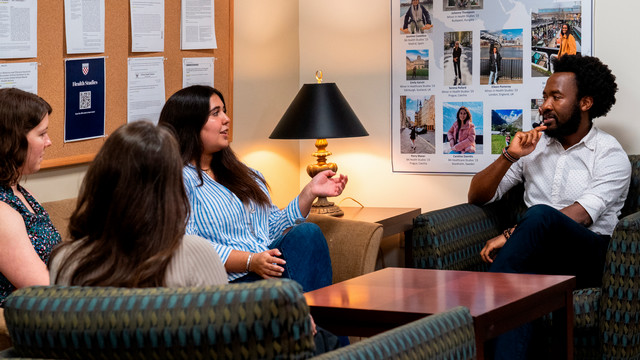
Researchers at UR — health studies professor Nigel James (above right); juniors Jada Pedersen, Huong Doan, and Liam Hayes; and 2026 graduate Leah Suggs — looked at the issue in Virginia. Their findings, published by the Journal of School Health, introduce a food insecurity index. It analyzes the relationship between adolescent mental health and limited or uncertain access to adequate food.
The researchers found that increases in food insecurity are associated with higher odds of feelings of sadness or hopelessness. Female students experienced nearly threefold higher odds than males, and “Being bullied on school property tripled the odds in both datasets,” they write.
The researchers point to a need to integrate screening for food insecurity to help identify and address overlapping mental health risks.