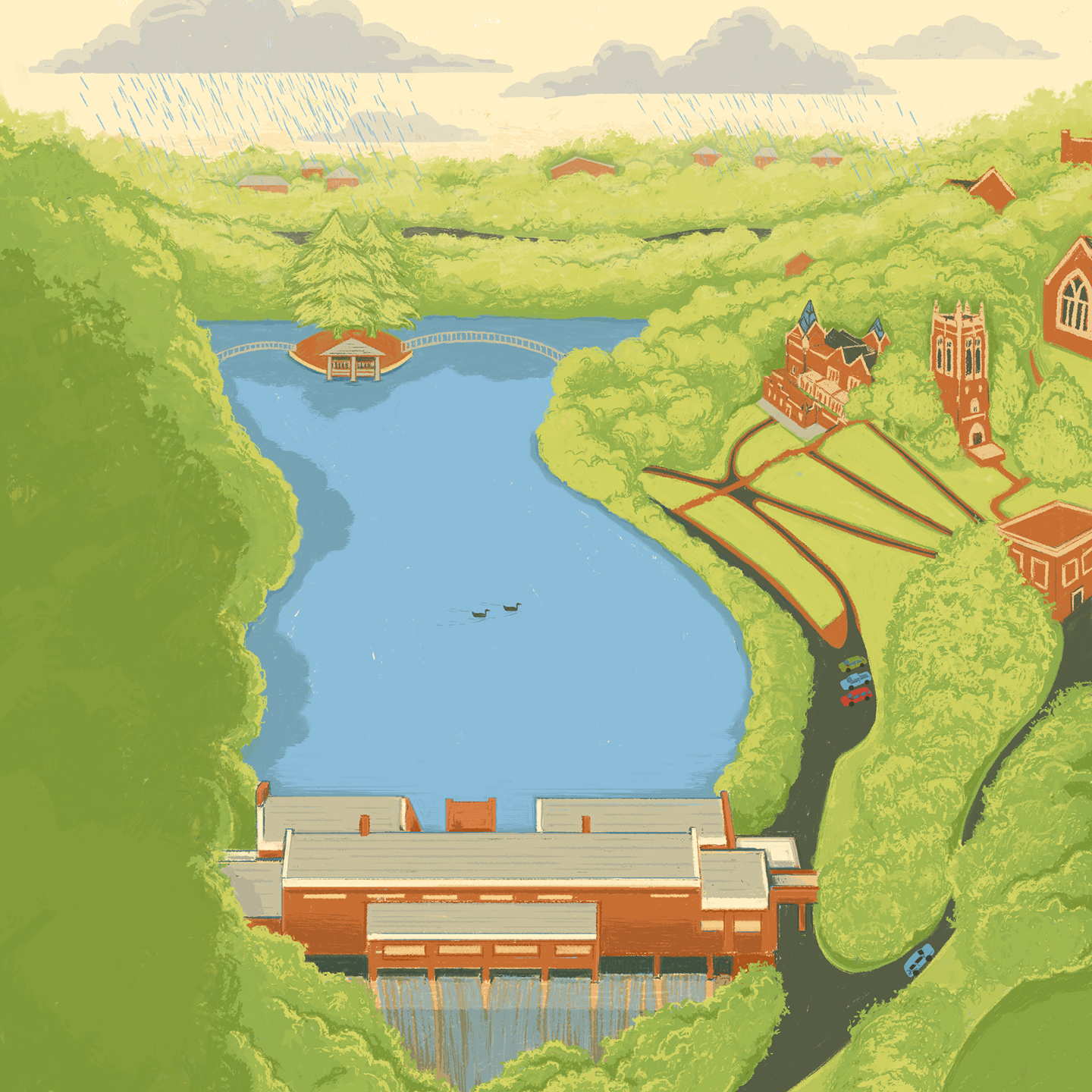
A campus centerpiece, a boundary, a relaxing place — Westhampton Lake has played many overlapping roles. One of its most important today is as a living laboratory where students can study the principles of aquatic ecology and water-quality management.
The health of the lake matters beyond our borders as its waters flow to the James River, on to the vast Chesapeake Bay, and finally into the Atlantic Ocean. Here, we show how water cycles through the lake, one early segment of this long journey.
As the water travels through campus, faculty and student researchers capture critical data that informs how the university stewards and protects this resource. Read more about their efforts in the story “From Boundary to Living Laboratory: University of Richmond’s Westhampton Lake.”

Encouraged by rainfall, feeder streams and culverts on and around campus wash the following into Westhampton Lake. Over time, these accumulate on the lake bottom:
- Sand
- Debris
- Leaves
- Yard waste
- Fertilizers
- Pesticide
- Roadway salts and oils
An upcoming bank-erosion project will create a living shoreline planted with native grasses, shrubs, aquatic plants, and trees. Its benefits include:
- Stabilizing eroding banks
- Slowing stormwater runoff
- Reducing sediment in the lake
- Improving habitat
- Supporting water-quality goals
Water-quality monitoring has shown:
- Increased levels of sediments and E. coli after heavy rains
- Low levels of oxygen, especially in warmer months when excess organic materials decompose on the lake bottom
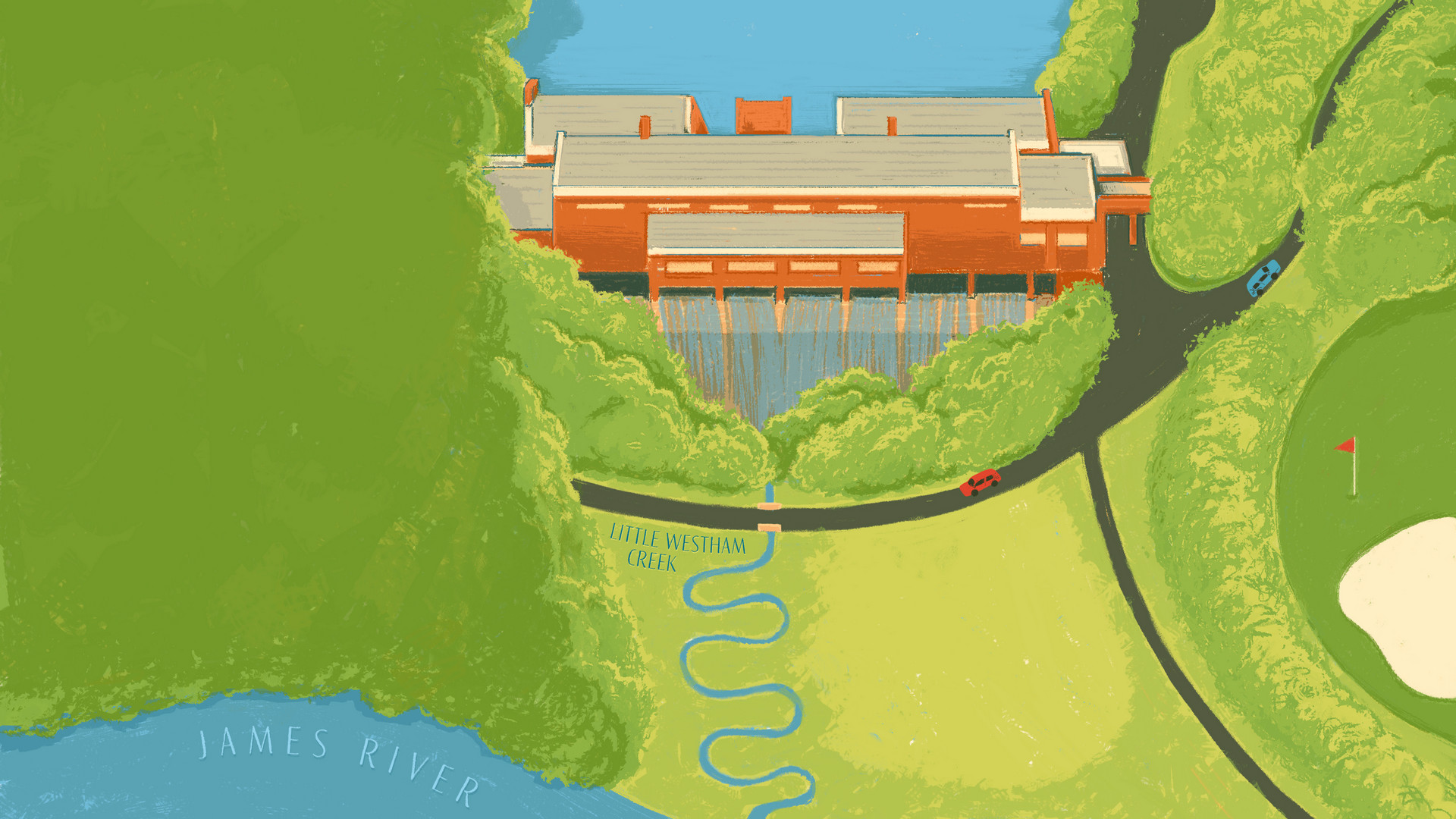
When water leaves the lake, it flows to the James River through Little Westham Creek. The Eco-Corridor, opened in 2020, reshaped the creek so it flows through meandering S curves and a restored floodplain. These features reduce erosion and slow the water so it drops additional sediment and nutrients to nurture the corridor’s many native plants before reaching the river.